
You're not preparing for two exams. You're preparing for one year.
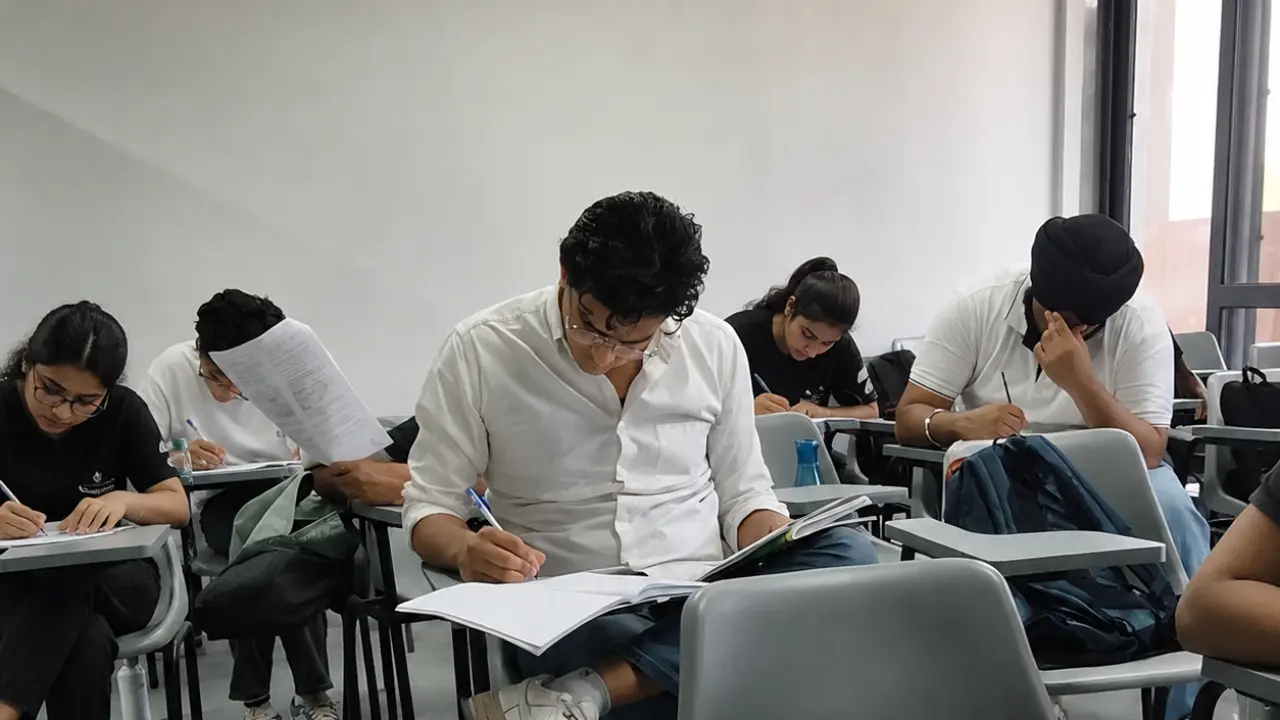
Every Class XII student asks the same question - "How do I balance boards and IPMAT preparation?"
It's a fair question.
Every year, we speak to students who genuinely want to prepare well for both. They understand the importance of Class 12 boards. They understand the significance of undergraduate entrance examinations. Yet, somewhere between school, tuition classes, practicals, pre-boards and the pressure of an uncertain future, preparation slowly begins to slip away.
Interestingly, the problem is rarely a lack of time. More often, it's a misunderstanding of how the year itself unfolds.
The Mistake Isn't Poor Time Management. It's Poor Timing.
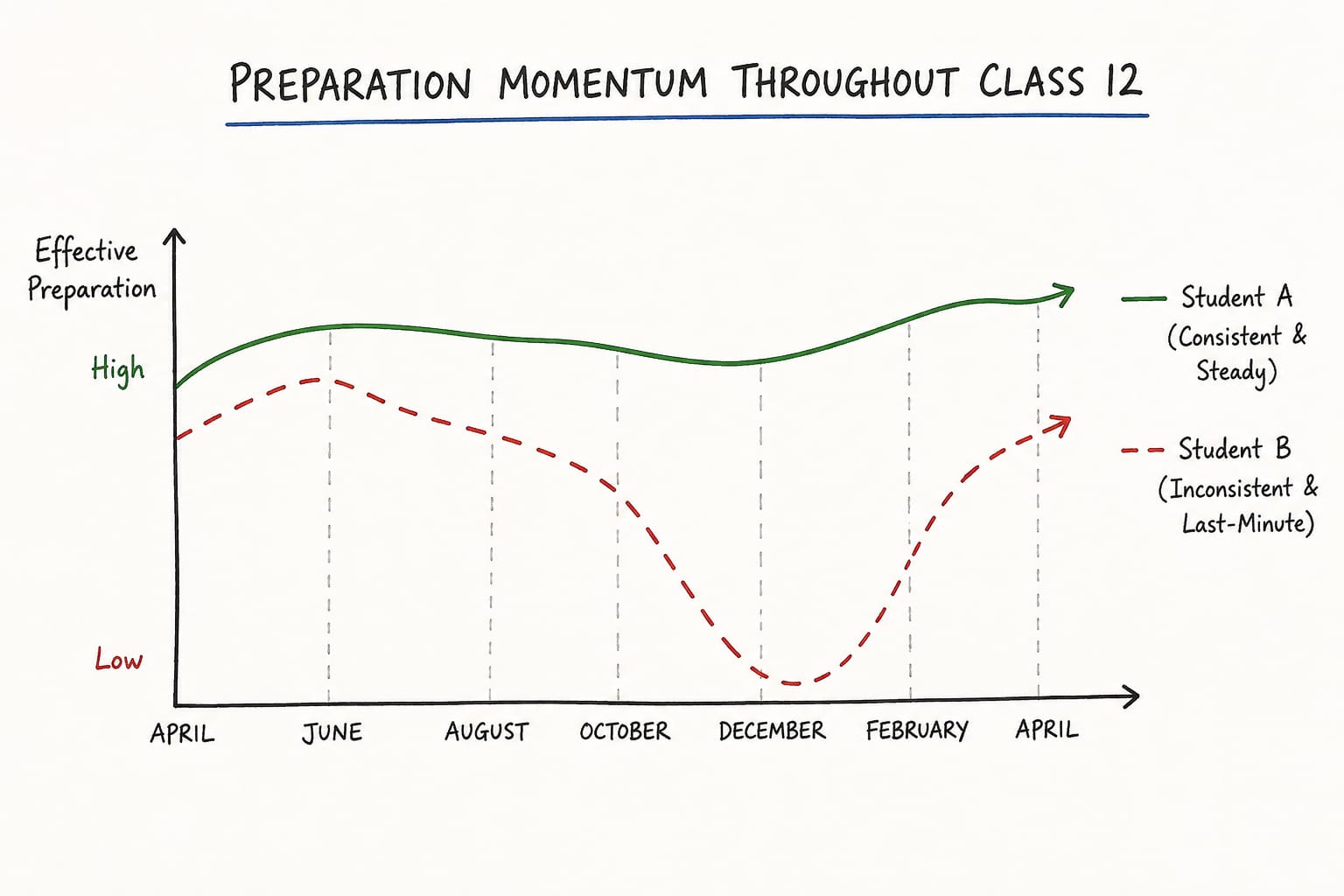
Most students try to maintain the same preparation strategy throughout Class 12. But Class 12 isn't one long academic session. It's four very different seasons. Each demands a different approach. Students who recognise this early stay ahead. Those who don't often spend the final months trying to recover lost ground.
Understanding the Four Seasons of Class 12
Season One - The Head Start
(April – August)
This is the most underrated period of the year. School pressure is relatively lighter. Tuition schedules are still manageable. Boards don't feel immediate.
Ironically, this is also when many students underestimate the entrance examination. The common belief is that there's plenty of time left. There isn't.
The students who use these months to build conceptual clarity and consistent study habits don't merely finish more syllabus, they create breathing room for the months ahead.
Season Two - The Balancing Act
(September – November)
Academic pressure begins to rise — School examinations. Assignments. Practical work. Tuition tests.
This is the stage where many students quietly stop preparing for entrance examinations—not because they decide to, but because they convince themselves they'll "catch up later."
We've heard this promise countless times: "Once exams are over, I'll cover everything."
Unfortunately, preparation doesn't work on promises. It works on continuity.
Season Three - Reality Sets In
(December – January)
This is when students begin taking more mock tests. Performance becomes measurable. Backlogs become visible. The comforting assumption that "everything is under control" slowly disappears.
For many students, this is also when anxiety replaces confidence. The problem, however, didn't begin in December. It began months earlier.
The mock tests simply revealed what consistent preparation—or the lack of it—had already created.
Season Four - The Excuse Cycle
(February – April)
Practical examinations begin. Boards arrive. Stress naturally increases. At this stage, students often believe circumstances have become the obstacle.
"I'll restart after boards." or "I need a short break after boards." or "It's probably too late now."
These thoughts are understandable. They're also dangerous. Because preparation rarely collapses in a single week. It slowly weakens through a series of reasonable-sounding postponements.
So, What Does Balance Actually Look Like?
April–August: Invest in building concepts.
September–November: Reduce volume. Never reduce consistency.
December–January: Use mock tests as feedback, not judgement.
During Boards: Accept that priorities shift. But don't disconnect completely from entrance preparation. Even a few focused sessions each week preserve momentum.
Three Things Every Aspirant Should Remember
- Preparation compounds.
What you do in April changes what becomes possible in March. - Momentum is easier to maintain than rebuild.
Missing one week isn't dangerous. Waiting for the "perfect time" usually is. - There is no magic month.
Every student hopes one month will solve everything. None ever does. Consistency does.