
Why Some Students Just “Get It” Faster

Have you ever watched someone solve a question in 30 seconds while you are still figuring out where to begin?
It is easy to look at that gap and conclude: “They are just talented.”
When something seems difficult to explain, we attribute it to something innate: talent, intelligence, or being “god-gifted”. But academic performance is rarely that simple.
The Comparison Trap
The problem with comparing your present self with someone else’s present self is that you are comparing two outcomes while ignoring the histories that produced them.
You don't know how many similar questions that student has seen, how long they have been practising, or how much exposure they have had to that kind of problem.
You are seeing the result. You are not seeing the experience behind it.
Think in XP, Not Talent
Think of learning like a video game.
A player who has spent hundreds of hours playing may recognise patterns, react faster and make decisions almost automatically. Put a beginner in the same game, and the difference can look like “natural ability”.
But it isn't necessarily magic. One player simply has more XP.
Academics work in much the same way.
Every question you solve, mistake you understand, pattern you recognise and difficult concept you revisit adds to that accumulated experience. Over time, things that once required conscious effort can become almost instinctive.
That is often what “fast” looks like from the outside.
Growth Isn't Always Visible
There is another uncomfortable part: improvement is rarely linear.
You may practise for weeks and feel like nothing is changing. Then, suddenly, questions that once seemed unfamiliar begin to look familiar. Your accuracy improves. Your approach becomes faster.
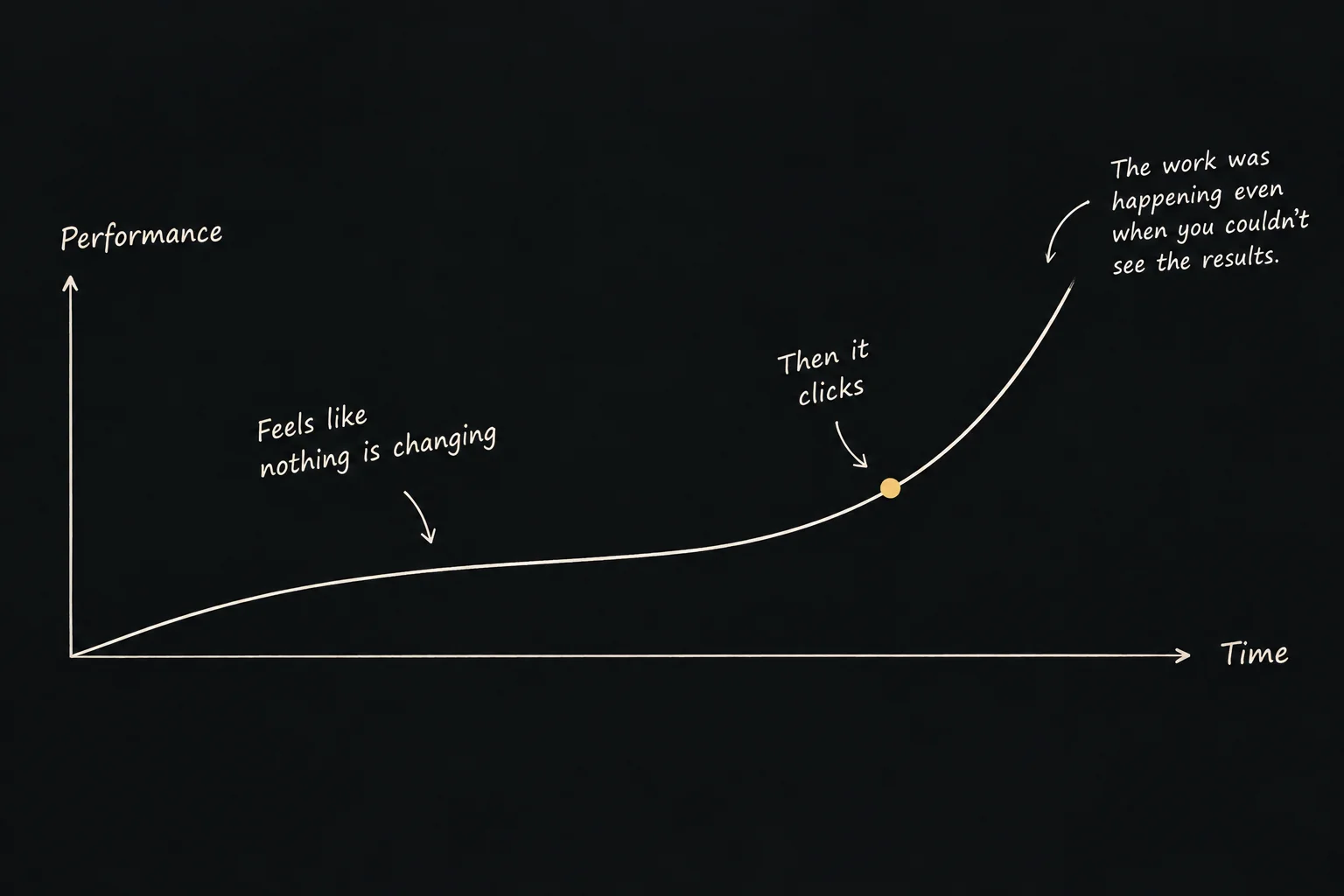
The work was happening even when the result wasn't visible.
That is why judging your ability from your performance today can be misleading.
So What Should You Measure?
Instead of asking, “Why is she faster than me?” ask:
“Am I faster than I was a month ago?”
Instead of “Why can he solve this and I can't?”, ask:
“What do I need to understand or practise to reach the level this question requires?”
The second set of questions gives you something to work with.
You may have a current gap in speed, accuracy or understanding. That gap is real. But calling it a permanent lack of talent doesn't help you close it.
Talent Is Not the Shortcut You Think It Is
There will always be students who start ahead. There will always be differences in exposure, background and aptitude.
The objective isn't to pretend those differences don't exist.
It is to stop using them as an explanation for where you must remain.
You don't need a magic shortcut. You need enough experience to reach the level the problem demands.
And sometimes, the student who looks “naturally faster” is simply a student who has accumulated more XP.
Your job is to start accumulating yours.